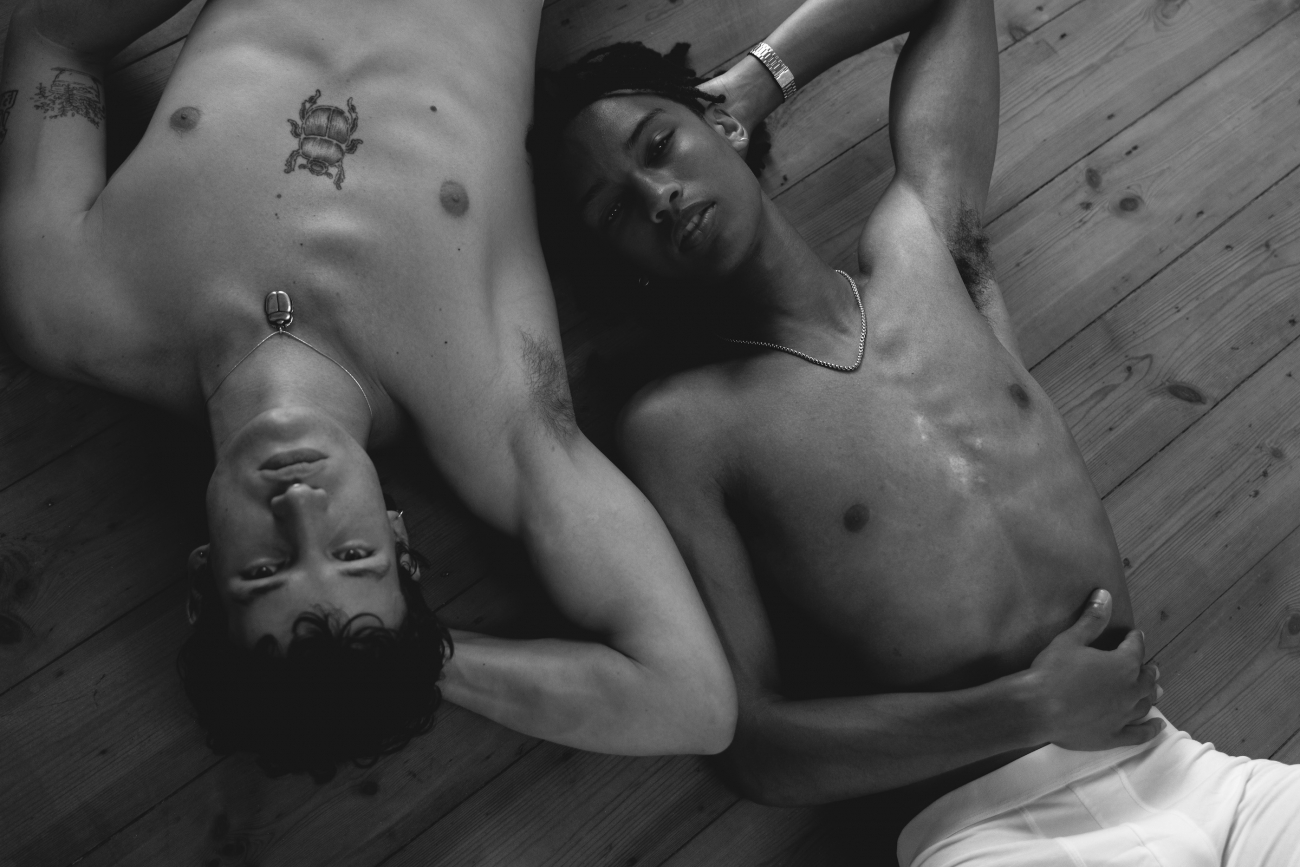
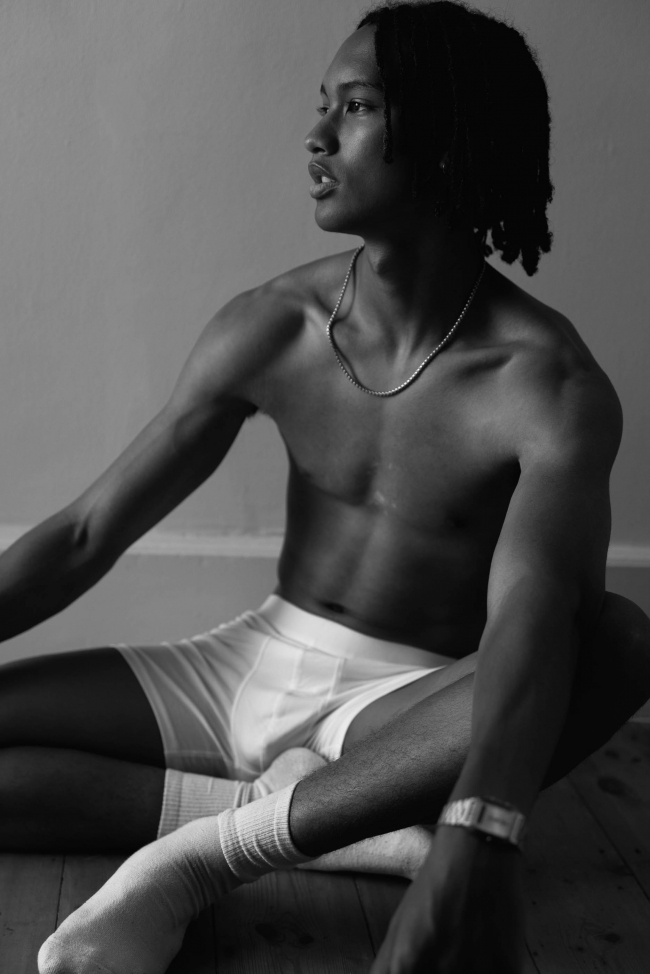
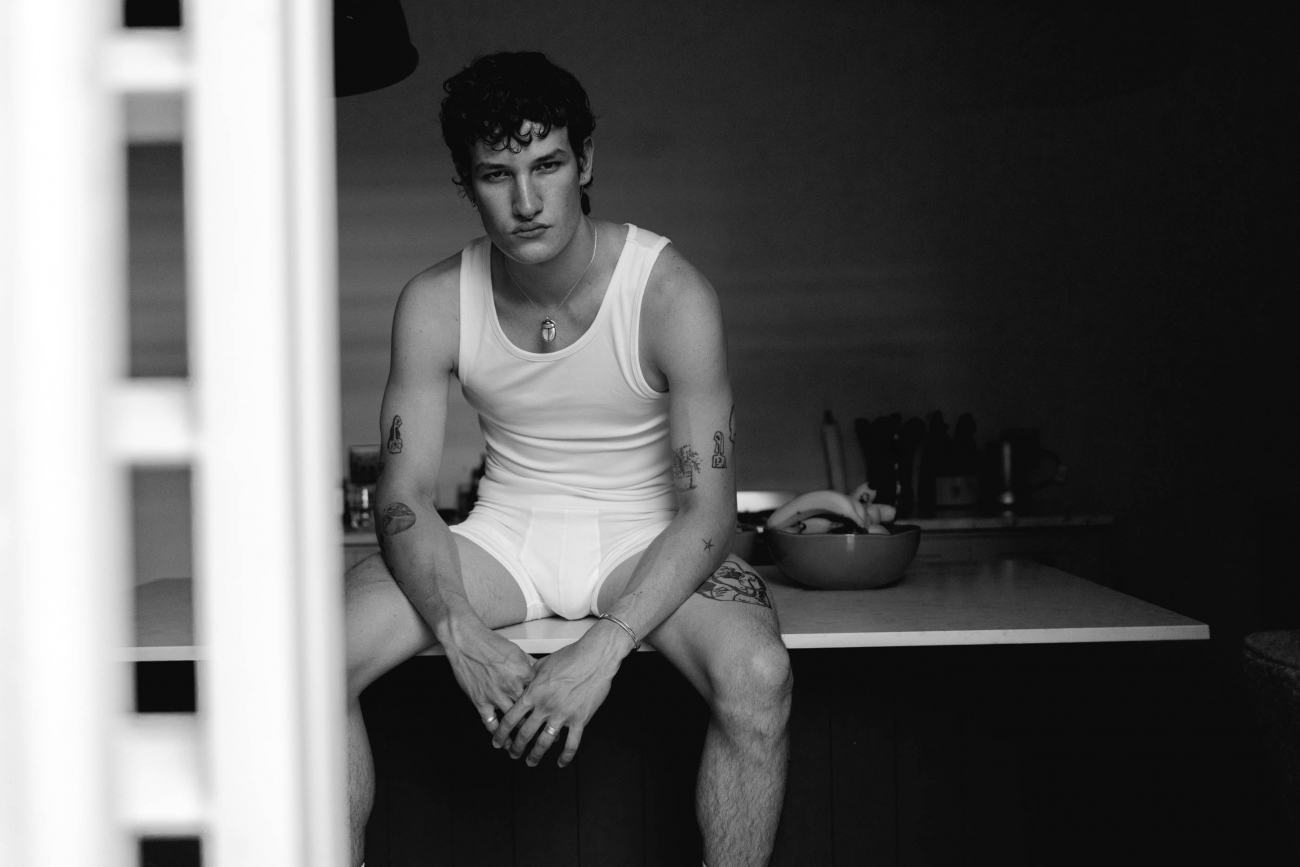
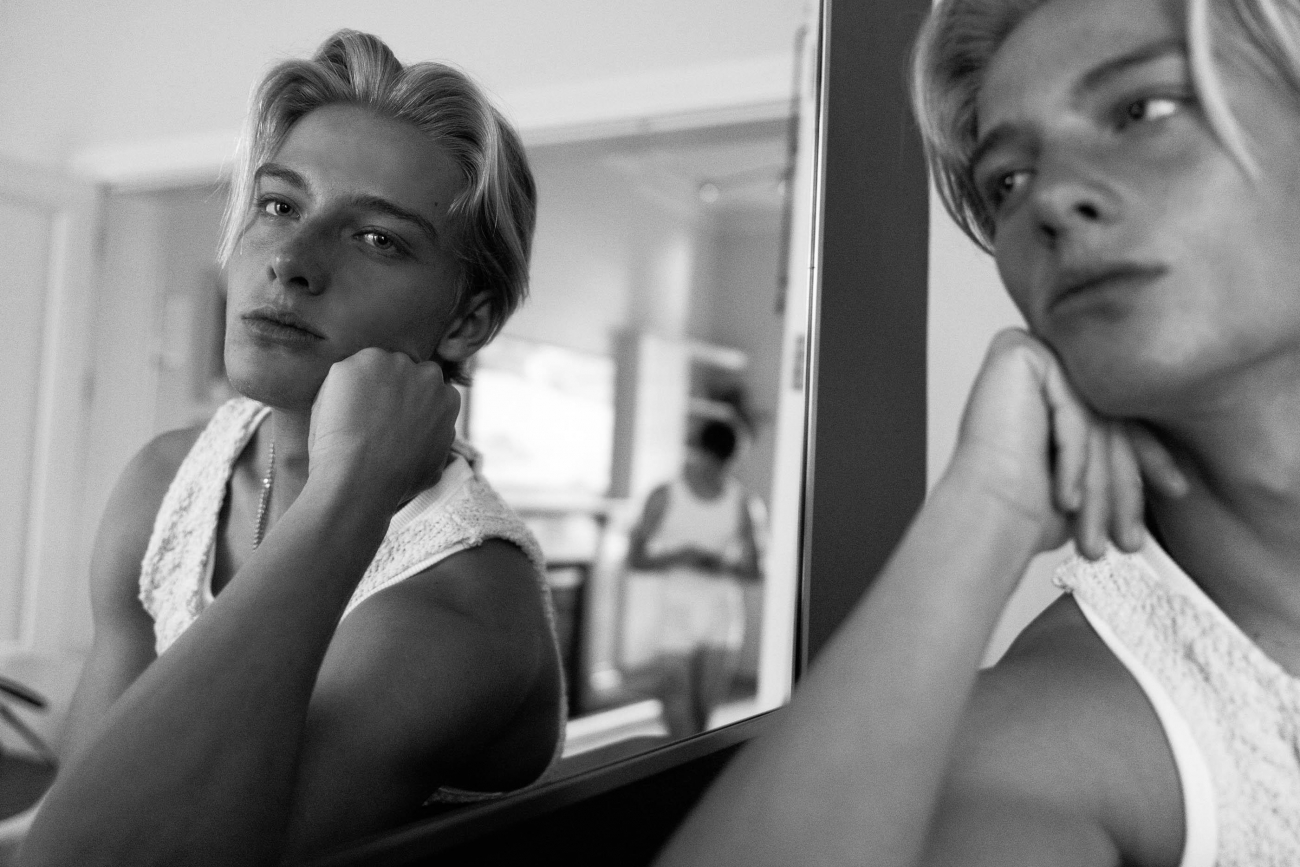
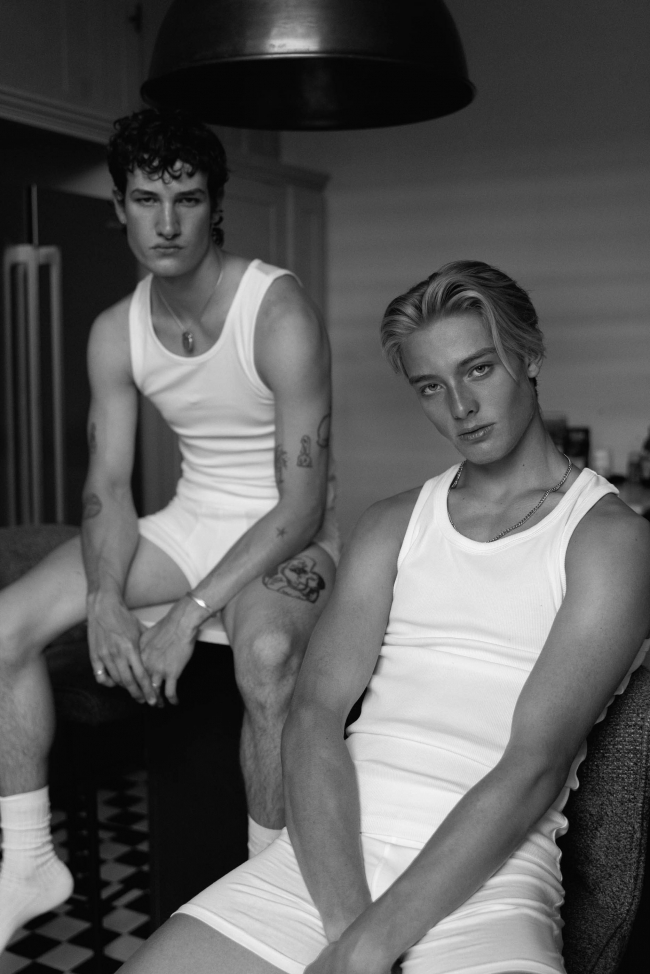
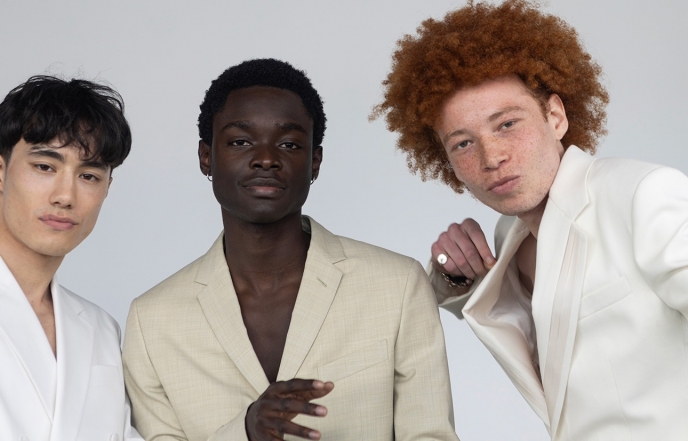
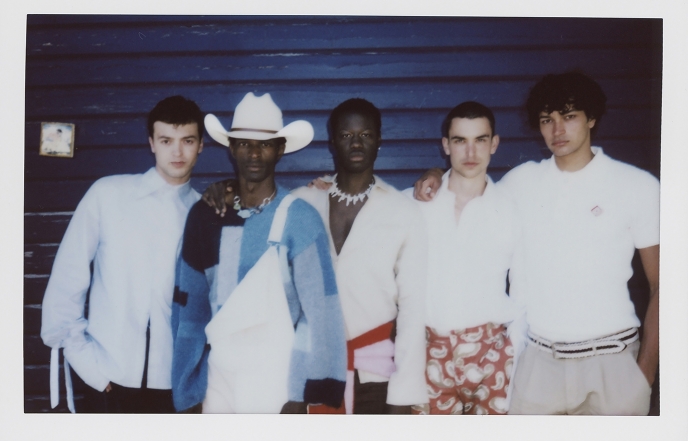
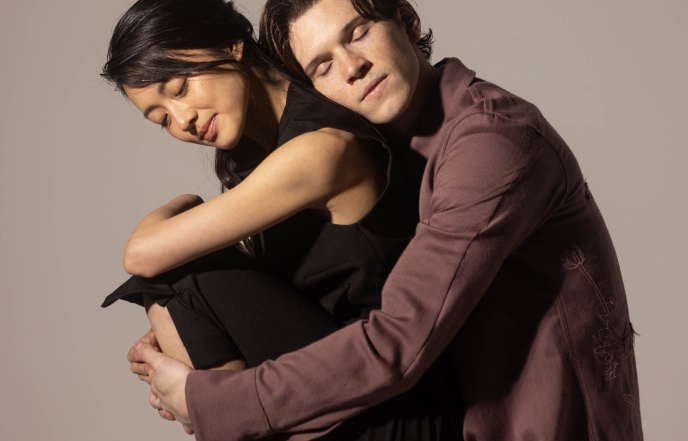
Models Kirk Nicol, Jordyn Beiling, Henry Joubert, and Jack Pollard at Boss Models South Africa
Photographer and Writer Nora Maafa
Assistant Ben Baumann
A photographer-written essay on the inherent superficiality of the photographer’s gaze, and why we keep calling it something else.
There is a particular kind of meeting that happens in the industry. You arrive. Someone else arrives. You look at each other for a few minutes, sometimes less. Then one of you decides whether the other fits. Not fits for you, but fits the idea. The idea you already had before the other person walked through the door.
We call this a go-see. It’s basically love at first sight, yet there are no hearts to be won. I have been on both sides of it. And I want to tell you what it actually is.
“I came to Cape Town with a concept in mind. I needed faces to put inside it. Kirk’s was one of them. He didn’t know that yet.”
The Concept I Arrived With
I came to Cape Town in January 2026 with a concept in place. The images were going to be about Boys of Summer, that specific archetype, the beautiful and the transient, young men caught between seasons, here at first and then gone. Don Henley wrote the song about longing for something past. I wanted to capture that feeling, and I thought I knew exactly who would carry it.
I chose Kirk the way you choose a coat. Not carelessly. I looked closely; I considered. I studied his set card: age, height, measurements, three photographs someone else took on a day I wasn’t there for. I looked at his face, compressed onto a piece of paper, and thought: Yes. He fits.
Fits what? My vision. Which he didn’t know. Which I hadn’t explained. Which, if I’m honest, I would never fully explain, not because I was hiding it, but because my concepts live in a register I rarely translate out loud. It’s faster to just show people. It’s easier to let it unfold on set and trust that it’ll make sense in the end.
The issue is: it’s my end, not his.
What Editing Showed Me
While editing, my initial concept collapsed - somewhere between the first selects and the final sequence. Why? Because I’d gotten it completely backwards. Kirk, Jordyn, Jack, and Henry are not the boys of summer. They don’t leave at the end of the season. They don’t fade into memory when the light changes. Cape Town is where they live. It’s where their lives happen, continuously, fully, without interruption.
“We are the boys of summer. We fly in with our concepts, do our work, call it something meaningful, and leave. The season ends for us. For them, it’s just a Tuesday.”
The Europeans, in my case, the photographers who arrive in January when the southern hemisphere is warm, who move through other people’s cities with prefabricated mood boards and narratives. We land, we shoot, we call it collaboration, and then we leave. The season ends for us. For them, it’s just a Tuesday.
The images you’re looking at now are not the photos I initially set out to take. The concept shifted during editing. When I finally realised what I’d actually gotten in front of the lens: not boys of summer. Boys of somewhere. Boys who belong to a place. A place that the industry treats as a backdrop. That’s what changed. And that’s what this is.
How a Go-See Works
You meet the model: either the model comes to you, or you go to them. The agencies in Cape Town are not makeshift operations. You walk into rooms with floor-to-ceiling walls of set cards. A collection of faces - face after face after face. Each of them a story you will never fully know. You look at the face. You look at the body. Sometimes you ask a few questions, or you don’t. Sometimes there’s a brief, bright conversation, the kind of thing when you feel like you’ve genuinely connected with someone. For a moment it feels like there is something substantial, something real amidst the brief encounter.
And then it goes: “Great, we’ll be in touch.”
Or you say: “See you on set.”
Either way, you leave with exactly what you came for and nothing more. The conversation was real. But that was never the point to begin with.
The Story We Tell on Set
I could tell you that we spent those days together warmly, that we shared intimate moments filled with genuine joy and laughter, that someone ordered pizza, that something real filled the room. Ultimately it’s always a temporary community gathered with one shared goal.
That would be a nice story. It would also be exactly the kind of story I’m talking about.
The truth is shallower: everyone in the room knew their job. They knew what I expected from them. I knew what they were about to deliver. We were all professionals, meaning we were all, to some degree, performing: performing ease, performing openness, performing the kind of looseness that’s needed for great photos. And we were good at it. As mentioned before: we were professionals. Yet performance, no matter how perfect, is not the same as being known. It doesn’t substitute the longing for real connection.
They don’t know about this article. They don’t know that I drafted a storyline around them, wrote a pitch letter, gave the whole thing a title while they were still living their actual lives in Cape Town. They provided what I came for. I left with it.
“In photography, this is not an oversight. It is the entire model.”
What I Mean by Superficiality
I want to highlight structural superficiality, not shallowness on a personal level, not failure of character or care. It’s by design. The go-see is built to require what’s visible - only. The set card reduces a person to his or her visual utility. The concept is already fully formed by the time the collaboration begins, which means the collaboration was never meant to have any real impact on the underlying framework.
I let people in easily. Always have, and probably always will. The stranger on the train who tells you something substantial about his life. The woman at the bar who’s leaving the city and knows it. I collect first chapters of people compulsively, and I almost never get to read the second.
At a go-see, not getting to read the second chapter isn’t a side effect. It’s the whole story. You don’t need the second chapter. You need the face, the body, the energy, and nothing beyond what fits the frame you’ve already sketched out. Everything else is outside the concept. So it doesn’t count.
What Else to Say
I don’t have a clean solution. I’ll keep working. I’ll keep showing up to go-sees, keep scrolling set cards, keep arriving in cities with prefabricated ideas and looking for the right faces to fill in the blanks.
But I think the least I can do is speak my truth: we built an entire aesthetic economy on knowing just enough about a person to make them useful. A system that never asks for more. We jet-set into other people’s lives for a season, collect what we need, and call it work.
The boys of summer, turns out, are us. First here, then gone. What stays is the longing for something more.
A note on tone: this piece is intentionally sharp. That sharpness is deliberate, and it comes from the opposite of detachment. One of the things I hold myself to most seriously is that every person I work with feels genuinely comfortable and seen. On set, that is always the priority. It’s precisely because that matters to me that these circumstances need to be publicly addressed out loud.